-
Correo electrónico
18083798558@163.com
-
Teléfono
18101455820
-
Dirección
Liubao Industrial Park, Yangzhou City, Jiangsu Province
Categorías de producto
Jiangsu Ruyan Busbar Manufacturing Co., Ltd
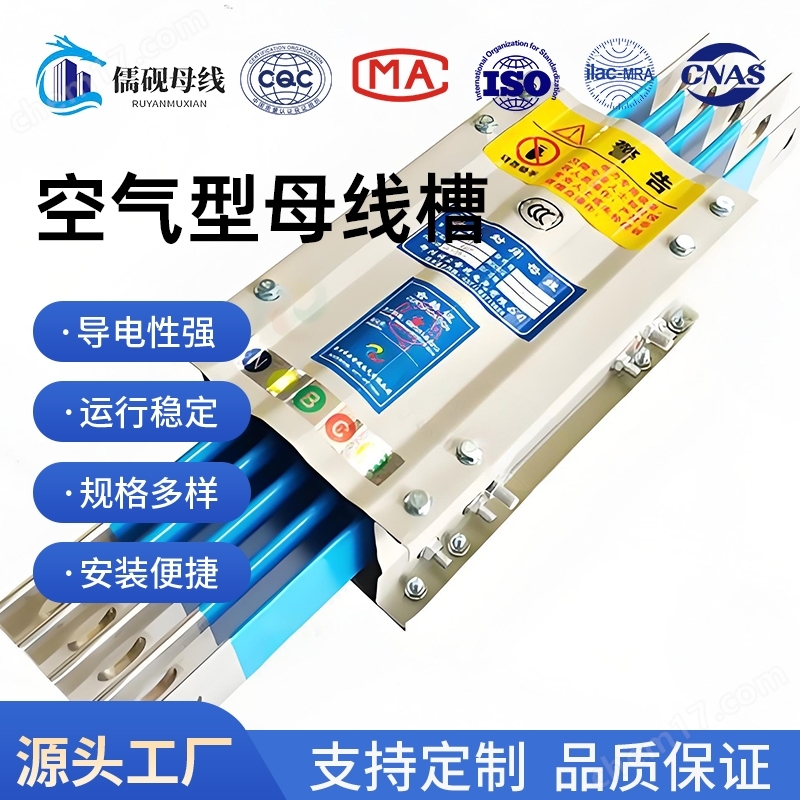



Air type bus duct has strong stability
NegociableActualización en12/19
- modelo
- Naturaleza del fabricante
- Productores
- Categoría de producto
- Lugar de origen
Descripción general
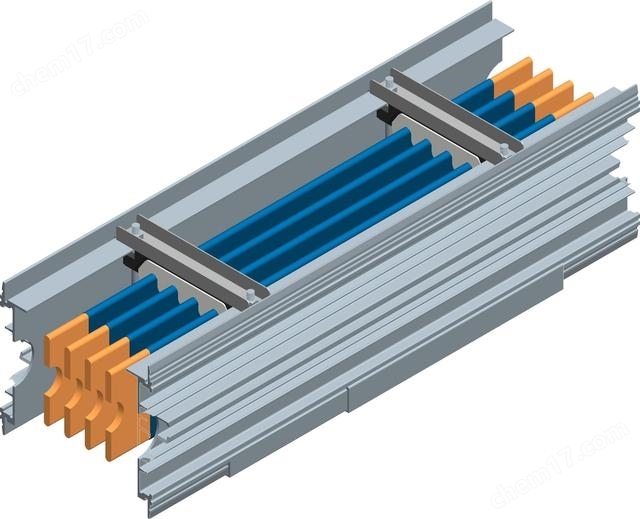
The conductors with strong stability in air type bus ducts are insulated through air gaps, mainly relying on air flow to dissipate heat. Its structure usually fixes the conductor on an insulating support, maintains a certain distance, and uses air as the insulating medium. This design creates more air circulation space inside the bus duct, and heat is dissipated through natural convection or forced ventilation.
Detalles del producto
Air type bus duct has strong stabilityThe conductors are insulated through air gaps, mainly relying on air flow to dissipate heat. Its structure usually fixes the conductor on an insulating support, maintains a certain distance, and uses air as the insulating medium. This design creates more air circulation space inside the bus duct, and heat is dissipated through natural convection or forced ventilation.
Advantages and characteristics of air type bus duct:
1. High conductivity:
Using high-quality conductor materials with low resistance and high conductivity can effectively reduce line losses.
2. Safe and reliable:
Adopting an insulated support structure to prevent direct contact between wires and ground or other metal materials, reducing the risk of electrical leakage.
3. Good heat dissipation performance:
The air type bus duct has a large internal space, which can provide good heat dissipation conditions and avoid accidents caused by overheating.
4. Flexible and adjustable:
The length of the air type bus duct can be adjusted according to actual needs for easy wiring and installation.
Parameter introduction:
1. Rated current capacity
Rated current is one of the core parameters for selecting busbar trunking. It refers to the innovative current value allowed to pass through the bus duct during long-term continuous operation. When selecting, the first step is to calculate the required innovative working current based on the total load of the distribution system. Then, the selected bus duct rated current should have an appropriate margin to accommodate possible future load growth or short-term overload situations. If the selected rated current is too small, it will cause the bus duct to operate under overload, causing overheating, accelerating insulation aging, and even causing faults. On the contrary, if the rated current is chosen too high, it will result in a waste of initial investment and may increase the difficulty and cost of installation due to the large cross-sectional area of the conductor. Accurately calculating the load current and selecting the appropriate rated current level is a crucial high-quality step.
2. Insulation performance and protection level
The insulation performance is directly related to personal and equipment safety. Air type bus duct relies on air and insulating materials for insulation, so it is necessary to pay attention to the heat resistance grade, flame retardancy, aging resistance and dielectric strength of the insulating materials used. High quality insulation materials can effectively prevent the occurrence of phase to phase short circuit and ground short circuit accidents.
The protection level is usually represented by an IP code, which defines the device's ability to protect against external solid foreign objects and moisture intrusion. For example, IP54 stands for dust and splash proof. When selecting, consider the installation environment conditions of the bus duct in a diversified manner. If installed in a dry and clean indoor environment, the requirements for protection level can be relatively low. But if installed in a damp, dusty, or slightly splashed water environment, it is advisable to diversify the selection of bus ducts with higher protection levels to ensure that their internal conductors and insulation are not affected by the external environment and to ensure long-term stable operation.
3. Conductor Materials and Structures
Conductors are the core components of bus ducts for transmitting electrical energy. The current mainstream conductor materials are copper and aluminum. Copper conductors have the advantages of high conductivity, strong current carrying capacity, good oxidation and corrosion resistance, and high reliability of connection points, but the initial cost is relatively high. Aluminum conductors are lightweight and cost-effective, but they require a larger cross-sectional area under the same current carrying capacity, and their surface is prone to oxidation. The processing requirements for joint connections are more stringent, and the stability of long-term operation needs special attention.
In terms of structure, it is necessary to examine the shape, cross-sectional area, and arrangement of conductors. Reasonable structural design helps optimize heat dissipation, reduce impedance, and lower voltage drop. The surface treatment process of conductors is also important, such as tin plating or silver plating, which can enhance corrosion resistance and improve contact performance.
4. Short circuit withstand strength
Short circuit withstand strength refers to the ability of a bus duct to withstand the electrical and thermal effects generated by innovative short-circuit currents. When a short circuit fault occurs in the system, the huge short-circuit current will generate significant mechanical stress and heat in a very short period of time. If the short-circuit withstand strength of the bus duct is insufficient, it may lead to serious consequences such as conductor deformation, insulation damage, and even fire. When selecting, based on the short-circuit capacity upstream of the distribution system, verify whether the rated short-time withstand current and rated peak withstand current of the selected bus duct meet the requirements. This is a crucial step in ensuring the safety of the system in the event of a malfunction.
5. Voltage drop
When current flows through the bus duct, voltage loss, also known as voltage drop, occurs due to the resistance and reactance of the conductor itself. Excessive voltage drop can lead to insufficient voltage of electrical equipment at the end of the line, affecting the normal operation of the equipment, especially precision equipment that is sensitive to voltage. The problem of voltage drop is particularly prominent in long-distance transmission or high current transmission applications. When selecting, it is necessary to calculate the voltage drop at full load operation based on parameters such as the length, rated current, power factor, conductor material, and cross-sectional area of the bus duct, to ensure that it is within the allowable range of the electrical equipment. Usually, voltage drop can be reduced by selecting materials with higher conductivity, increasing the cross-sectional area of conductors, or shortening the power supply distance.

Air type bus duct has strong stabilityFuture development direction:
1. Environmental characteristics: In the future, air type bus ducts will pay more attention to environmental characteristics, using renewable materials and high-efficiency conductors to reduce energy consumption and environmental pollution.
2. Intelligent application:
With the help of modern technology, air type bus ducts will be combined with intelligent power systems to achieve remote monitoring and management, improving the safety and reliability of the power supply system.
3. Multi functional design:
Future air type bus ducts will incorporate more functional designs, such as fire and earthquake resistance, to meet complex and changing usage environments.
Producto similar Recomendar


